
Feature photo by Richard Foster
Dual-income couples with no kids, often referred to as DINKs, have become one of the fastest-growing household types in the United States. Delaying parenthood or opting out of it has shifted the way many couples think about money, time, and lifestyle.
Instead of prioritizing school districts or childcare costs, these households tend to focus on affordability, career opportunities and leisure.
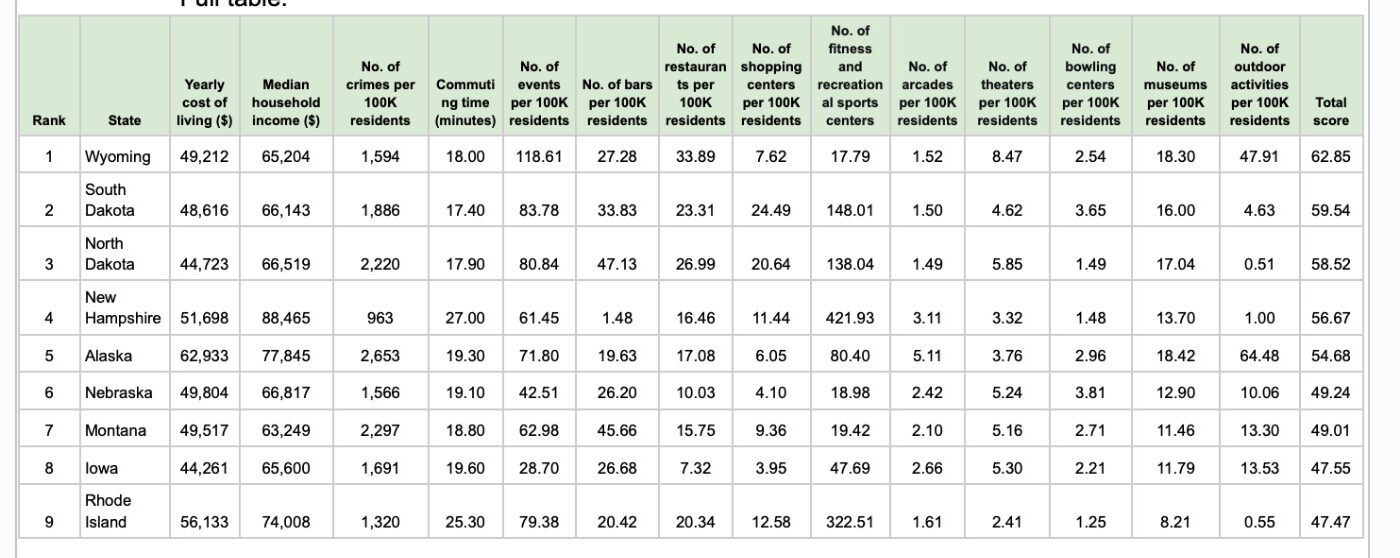
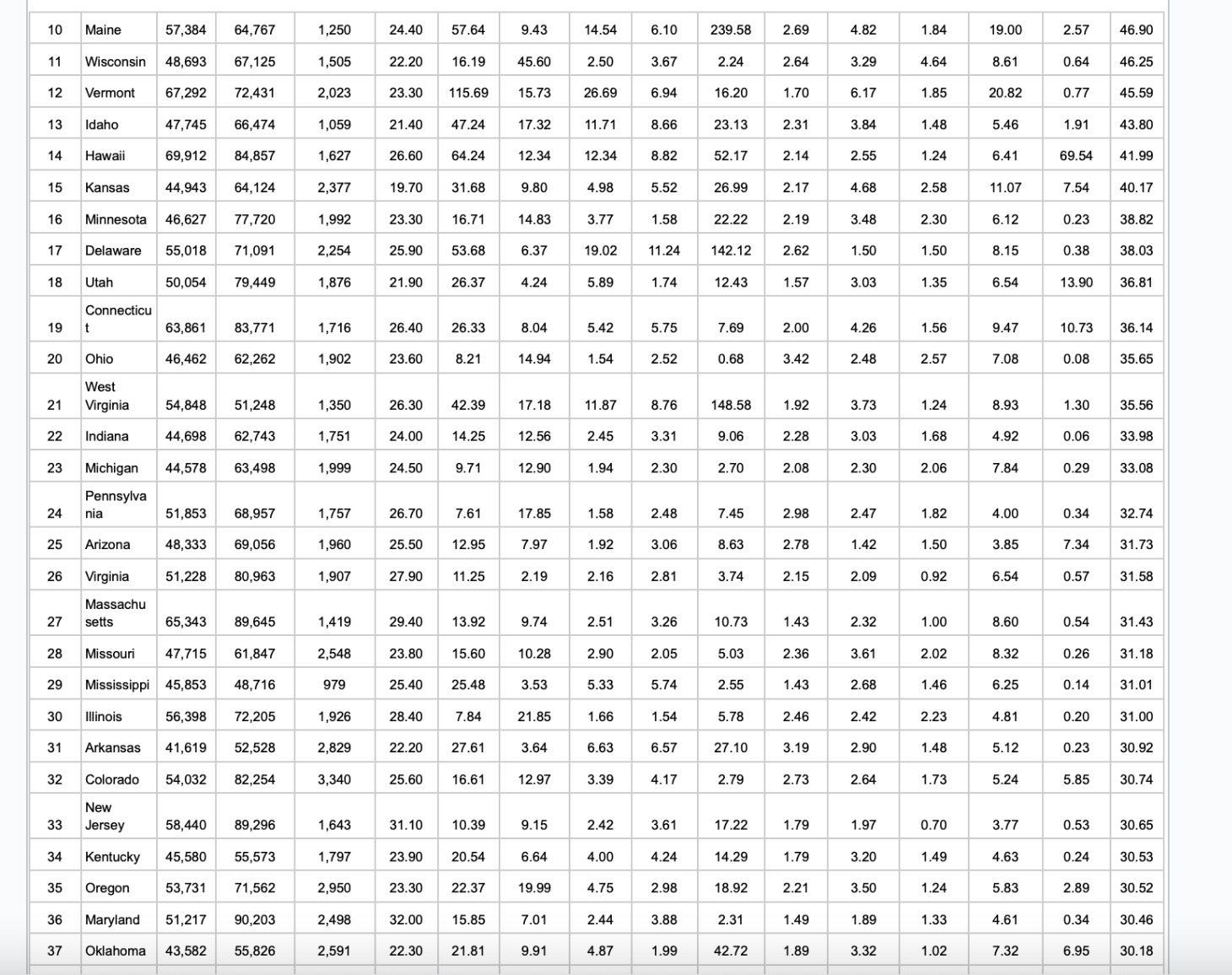
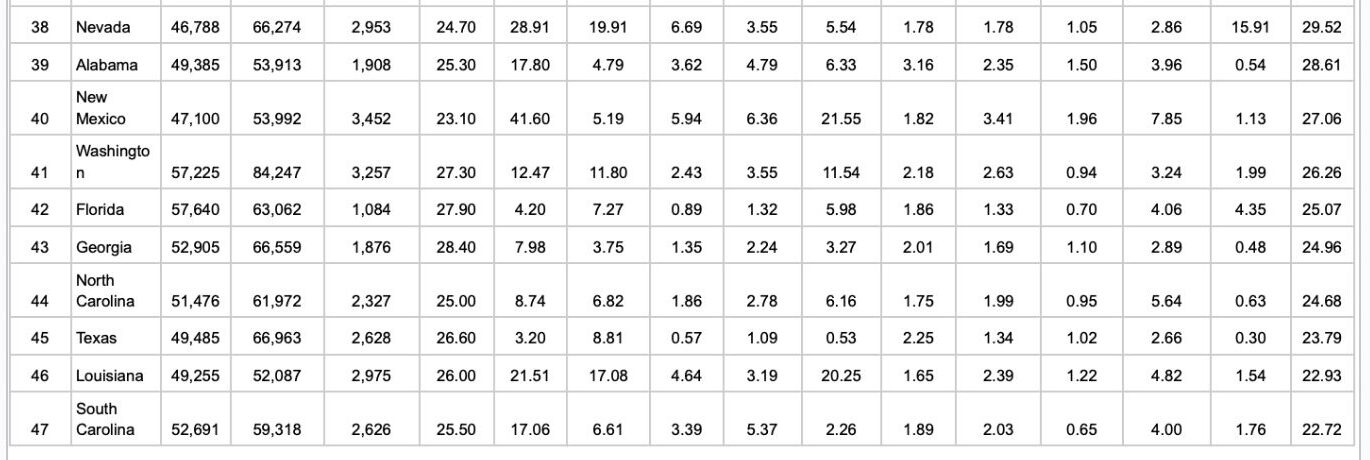
A new study by Go Au Pair set out to identify which U.S. states offer the strongest overall quality of life for DINK couples, using 14 weighted metrics, from living costs and household income to commuting times, crime rates, and the density of restaurants, bars, events, and outdoor activities.
The top-ranked states stand out for delivering efficient, experience-driven lifestyles without big-city stress. Wyoming leads thanks to short commutes, low crime, and an unusually strong mix of restaurants, entertainment, and outdoor access.
South Dakota and North Dakota round out the top 3 with some of the shortest commute times in the country, low living costs, and dense social scenes relative to population. New Hampshire ranks fourth for its high income and safety, while Alaska is fifth with high earnings, short commutes, and a lifestyle rich in culture and outdoor activities despite higher costs.
The rest of the top 10 emphasize balance and livability. Nebraska (6th) and Iowa (7th) benefit from affordability, low crime, and solid entertainment and fitness infrastructure. Montana (8th) appeals through its social scene and outdoor lifestyle, Rhode Island (9th) offers a compact, culture-rich urban option, and Maine (10th) stands out for safety and cultural amenities, attracting couples who prioritize calm, quality of life, and experiences over scale.
Devon Kapler Leftwich, a spokesperson for Go Au Pair, commented on the study’s findings:
“Dual-income couples without kids are often making very intentional lifestyle choices. They’re not just asking, ‘Where can we afford to live?’ but ‘Where can we actually enjoy our time together?’ That’s a big shift from previous generations.
“What we see is that these couples value flexibility more than status. Short commutes, access to culture, and outdoor activities consistently matter more than being in a famous city. Time has become just as valuable as money.
“Another important piece is stability. Many DINK couples are thinking long-term, even if they don’t plan on having children. Low crime, reliable infrastructure, and healthcare access all factor into how secure a place feels to settle in.
“There’s also a strong link between DINK households and local economies. These couples tend to spend more on experiences, such as restaurants, events, fitness, and travel, which helps smaller states and cities punch above their weight culturally.”
Additional info here: