

By GREGORY GALLIVAN
The Health Resources and Services Administration (HRSA) estimates that the United States will be short 141,160 physicians by 2038. It says we will experience this aspect of the healthcare crisis in 30 out of 35 medical specialties.
Despite those numbers, America keeps describing its healthcare workforce problem as similar to a scheduling inconvenience. We get the feeling that it is an HR issue that can be solved by signing bonuses and burnout webinars. But for patients, it has already crossed a line. This is a daily access-to-care crisis measured in months-long waits and rushed visits. People are giving up on getting help at all.
We cannot fix this by squeezing more productivity out of an exhausted workforce. We have to expand the workforce itself, and that means rethinking how we educate and welcome people into medical careers. Not someday. Now. A healthcare system that cannot be reliably reached is not a functioning system. It is, as too many families already feel in their bones, dangerously broken and insufficient.
Why America’s healthcare workforce shortages are becoming an access-to-care issue
Access is not an abstract policy term. Access is the parent who cannot find a pediatric behavioral health appointment before a crisis becomes an emergency; the older adult who waits months for a specialist while symptoms worsen; the rural patient who has choices on paper but none within driving distance, or none that take new patients; the working person who cannot take time off to make the appointment fit the doctor’s schedule.
When clinicians are scarce, time becomes the most expensive commodity in healthcare. Practices shorten visits and push care down the road. Patients experience this as indifference, even when individual clinicians are doing heroic work.
And the impact is not evenly distributed. Communities with fewer resources are hit first and hardest. That is where families already struggle for time, transportation, childcare, and consistent support. Long waits widen inequality and make preventable problems irreversible.
How medical education and training pathways create barriers
If we wanted to design a system that limits the supply of healthcare professionals, we could hardly do better than the one we have.
We have allowed the cost of education to become prohibitive. Undergraduate tuition expenses alone are enough to slam doors shut. Students face bills worth tens of thousands each year at public institutions, and at elite private institutions, the current cost is around $90,000 per year. Stack that onto medical school and years of additional training, and we cannot be surprised that economic factors now determine who can even attempt the path. A society that prices being a doctor as a luxury purchase will get luxury pricing in access to doctors.
Worse, we treat the pathway as a gauntlet to weed out those who do not fit a certain learning mold, even though human learning clearly takes many paths. Just as flowers do not all bloom at once, some students need more time, and some need different methods. Yet we cling to rigid sequences and narrow definitions of merit, all the while complaining that we cannot find enough people to hire.
We talk about compassion in healthcare, but we maintain an education pipeline that excludes talented and caring people, particularly those without wealth and those whose childhoods included disruption or trauma. If we want a healthcare workforce that serves everyone, the route into it must be accessible to all, including children who start life without ample prospects.
Why expanding the workforce must be central to affordability and access
We debate the affordability of healthcare as if it is only an issue because of insurance companies or drug manufacturers. But just like everywhere, when supply is scarce, prices rise. Scarcity produces market power, forcing people into out-of-network outcomes they would never have sought otherwise.
Expanding the workforce is a direct affordability strategy. More clinicians and clinics mean more competition, which leads to greater availability and less reliance on high-cost emergency and hospital care. Emergency care often fills the gaps when routine care is unreachable.
More healthcare availability also improves communication between doctors and patients. Expanding the workforce will improve the quality of care by once again creating time for listening and building relationships grounded in trust.
How policymakers can rethink education and workforce development
A serious workforce agenda has to begin earlier than medical school. To encourage early interest in medical studies, we need learning environments where kids can be relaxed and motivated. We need places where learning is joyful.
The next generation of healthcare professionals will be best prepared by environments that cultivate hands-on learning, arts, physical activity, and practical life skills. Today, these areas of study are treated as extras. They are routinely regarded as electives rather than essentials. This needs to change now.
When we treat subjects like music and physical education as part of a child’s core development, we produce confident adults who can think for themselves. This is crucial because healthcare workers make life-and-death decisions every day. The sector desperately needs thinkers with critical reasoning skills over rote conformity.
Next, we must make the pipeline financially reachable. States already experimenting with free community college are showing a start by reducing the cost of prerequisites and investing in housing and food support. We must stop pretending tuition inflation is inevitable. If we can accept that some students accumulate $200,000 in debt and call it normal, we can certainly accept public investment that costs less than the downstream damage of untreated disease and delayed care.
Then we must modernize training capacity. We can create more clinical training slots and streamline transitions into understaffed roles such as nursing and primary care. We can support bridge programs and apprenticeship-style models that build competence through practice and mentorship instead of gatekeeping through debt.
Our current healthcare system is sick and not results-oriented, so let us change the direction by providing better incentives. Let us give our children every opportunity for success, and all of us will have the reward of building a bigger, kinder, more compassionate workforce.
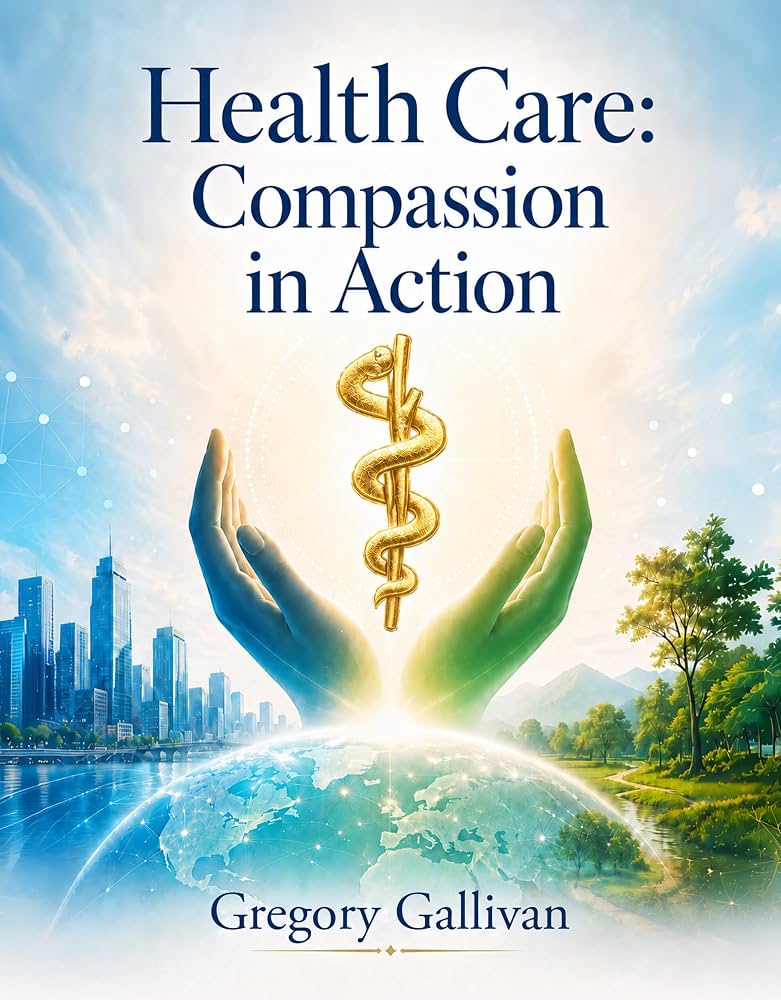
— Gregory Gallivan is a New England-based healthcare policy author, public speaker, and insurance industry expert dedicated to advancing a more accessible, affordable, and compassionate healthcare system. With a background in pre-medical studies and years of experience as a licensed health insurance broker, he brings firsthand insight into the challenges patients, providers, and insurers face. In “Health Care: Compassion in Action,” Gallivan presents a practical vision for transforming American healthcare centered on patient empowerment and medical education reform.